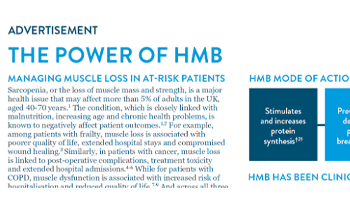
HMB has been shown to double muscle protein synthesis.°*4,30 and reduce muscle protein breakdown by half.°*4,30
HMB also results in 10 times more muscle maintenance with the same protein intake.**31
So, how do we get it? HMB can be found in very small amounts in some foods, such as avocados and asparagus.28 But to get just 3g of HMB from diet alone, you would need to eat huge amounts of HMB-containing foods.28
Prescribing and recommending nutritional support with HMB is clinically proven to improve your patient’s muscle mass, strength, physical performance, and quality of life.8-9,15-16,†,#,‡
The benefits of oral nutritional supplements containing HMB are supported by evidence from over 18 clinical studies,9-27 demonstrating the capability of oral nutritional supplements containing HMB in supporting muscle health, strength, physical performance, and quality of life.8-9,15-16,†,#,‡
Prescribe or recommend nutritional support containing HMB for your patients today.
If you would like more information about Abbott products containing HMB, please click on the below